Latest Forex Articles

Stay informed with in-depth broker reviews, regulatory updates, trading guides, and market news written by our expert team.

100+

Articles Published

18

Expert Authors

Daily

Updated News

Forex Trading Strategy

πŸ”₯ Top Story

The world of forex trading is exciting, fast-moving, and full of opportunities. Every day, trillions of dollars move through the global currency market as traders, banks, governments, and institutions exchange currencies from around the world. For beginners, this market can seem overwhelming at first. Charts move quickly, prices fluctuate every second, and financial terms may sound confusing. Yet with the right approach, learning a strong forex trading strategy for beginners becomes much easier and far more rewarding.

But here’s where many beginners go wrong. They hear stories about traders making fortunes overnight, open an account, click a few buttons, and then wonder what happened when their capital disappeared.

The difference between those who survive and eventually thrive in forex trading and those who burn out quietly isn’t luck. It’s a strategy. Specifically, it’s having a forex trading strategy for beginners that is honest, structured, and built for the real world rather than fantasy.

This article explains everything a new trader needs to know to build a practical forex trading strategy. From understanding currency pairs and market sessions to choosing the right indicators and managing a minimum deposit account, this article walks through the essentials in a simple and natural way.

What Is the Forex Market, Really?

Before you can build any forex trading strategy, you need to understand what you’re actually trading. Forex is the marketplace where currencies are bought and sold against each other. When you exchange Indian Rupees for US Dollars at an airport, you are, in the most basic sense, participating in forex. The professional version is simply more sophisticated, more leveraged, and a lot more liquid.

The forex market operates in currency pairs. You always buy one while simultaneously selling another. The most popular pairs are EUR/USD (Euro vs. US Dollar), GBP/USD (British Pound vs. US Dollar), and USD/JPY (US Dollar vs. Japanese Yen).

The forex market doesn’t live on a single exchange like a stock market does. Instead, it runs across a decentralized global network of banks, brokers, institutions, and individual retail traders. They are all connected electronically. This is why it operates 24 hours a day, five days a week, across four major trading sessions: Sydney, Tokyo, London, and New York.

The Golden Rule: Start With Risk Management

Most beginner guides jump straight to charts and indicators. This one won’t. Because the number one forex trading strategy for beginners isn’t a technical pattern or a secret indicator. It is actually risk management. Before you learn when to enter a trade, you must learn how much to risk it.

Professional traders often follow the “1% Rule,” i.e., never risk more than 1% of their trading account on a single trade in order to avoid losses.

The goal of a beginner is not to make money. The goal is not to lose money while you learn how the market works.

Position sizing is the mechanical tool of risk management. It means calculating exactly how many lots or units to trade so that if your stop-loss is hit, your account only loses that predetermined 1% (or whatever percentage you choose). Most trading platforms have built-in position size calculators, and there are dozens of free ones online. Use them religiously.

Set a stop-loss on every single trade without exception. A stop-loss is an automatic order that closes your trade if the price moves against you by a set amount. It is your safety net.

Understanding the Minimum Deposit: Your Starting Point

One of the first practical questions every beginner asks is: how much money do I actually need to start trading forex? The minimum deposit required by most retail forex brokers today is surprisingly low. This can be as low as $1 to $10 to open a live account. Others set their minimum deposit at $100, $200, or $500, depending on the account type.

Micro Account $1 – $50 Pure practice with real money psychology Safe Start
Mini Account $100 – $500 Building real skills with manageable risk Recommended
Standard Account $1,000+ Traders with 6+ months of experience Not for Beginners

A trader must always cross-check the broker’s regulatory status and choose one based on their minimum deposit requirements. A broker regulated by a recognized authority, such as the UK’s FCA, Australia’s ASIC, or India’s SEBI, always provides a safety net that an unregulated offshore broker simply doesn’t.

Four Core Forex Strategies Every Beginner Should Know

Now we arrive at the heart of any practical forex trading strategy for beginners: the actual methods of deciding when to buy and when to sell. There are dozens of trading styles in the forex world, but four fundamental approaches are accessible, well-documented, and proven enough to build a beginner’s education around.

Trend Following

This is the simplest forex trading strategy where you identify the market’s direction and trade accordingly. Moving averages like the 50-day and 200-day MA are the classic tools.

Support & Resistance

Price tends to bounce off certain levels repeatedly. These are support levels (floors) and resistance levels (ceilings), and traders trade on the anticipated bounces.

Breakout Trading

When price is compressed into a tight range like a coiled spring, a breakout strategy waits for the moment it bursts out. You trade the direction of the break, ideally confirmed by a spike in volume.

Price Action Trading

This approach removes most indicators and reads the raw language of the market, such as candlestick patterns, bar formations, and price behavior alone. Patterns like the pin bar, engulfing candle, and inside bar signal who is in control of the market: buyers or sellers.

Each of these four approaches can form the backbone of a beginner’s forex trading strategy. The key is to pick oneΒ  and study it until it feels like second nature before adding complexity.

Reading the Charts: A Beginner’s Compass

At the beginning, charts can look like alien terrain: flickering candlesticks, crossing lines, colorful oscillators. But like any language, it becomes readable with practice.

But it is easier to start with the candlestick chart, which is the standard visual format used by most forex platforms. Each candle represents a specific time period: 1 minute, 1 hour, or 1 day. This shows four prices: the opening price, the closing price, the highest price, and the lowest price.

The three most important technical tools for any beginner forex trading strategy are deceptively simple. Moving averages smooth out price noise and show the overall trend.

Pro Tip

Never trade on a single signal. Professional traders look for multiple signals from different sources that agree simultaneously. If your moving average says “buy,” your RSI says “not overbought,” and price is sitting on a major support level, that’s a much higher-quality setup than any one signal alone.

Higher timeframes are more reliable. A trend signal on a daily chart is significantly more powerful than one on a 5-minute chart.

The Psychology That No One Warns You About

Here is the uncomfortable truth at the heart of every forex trading strategy for beginners: the market doesn’t beat most traders. Their own minds do. Trading psychology is the invisible variable that transforms a textbook strategy into either consistent profit or emotional wreckage.

Fear and greed are the two primary demons. Fear makes you exit a perfectly good trade too early, robbing you of the profit you planned for. Greed makes you hold a losing trade too long, hoping it will turn around, until a small loss becomes an account-destroying disaster. It makes you risk far too much on a “sure thing” that the market knows nothing about.

The antidote to both is a trading strategy written in advance and followed without negotiation. It defines which currency pairs you trade, which strategy you use, the conditions that must be met before entering, where your stop-loss and take-profit are set, and how much of your account you risk.

Before You Place Any Live Trade, Ask These Questions

Q.1 Does this trade exactly fit my strategy rules, or am I bending them?

Q.2 Where is my stop-loss, and is my position size correct for my 1% risk rule?

Q.3 What is my take-profit target, and is the risk-to-reward ratio at least 1:2?

Q.4 Am I trading because of a genuine signal, or because I’m bored or anxious?

Q.5 Have I checked the economic calendar for major news events in the next 24 hours?

Common Mistakes That Destroy Beginners and How to Avoid Them

The path every beginner walks has certain well-worn pitfalls. Knowing them in advance doesn’t guarantee you’ll avoid them entirely, but forewarned is forearmed.

Over-leveraging is the first and most lethal. Leverage allows you to control a large position with a small amount of capital. A broker offering 1:100 leverage means $100 controls a $10,000 position. This sounds thrilling until the market moves a fraction of a percent against you, and your $100 is gone. Beginners should use the lowest leverage available (ideally 1:10 or lower) until they fully understand how it amplifies both gains and losses equally.

Revenge trading is the second trap. You lose a trade. The frustration boils up. You immediately open another trade to “get it back.” This trade is not based on strategy, but it’s based on emotion. It often loses too. And now you’ve lost twice the amount on back-to-back trades driven by feeling rather than reason. The fix is simple: after any losing trade, step away from the screen for at least 30 minutes before looking at another setup.

Chasing the market is the third common mistake. You see a currency pair that has already moved 80 pips in one direction. You jump in, fearing you’re missing out. But the move is exhausted. The market reverses, and you’re now trapped in a bad entry. The discipline to wait for the next setup rather than chase the current.

Your First Step Into the Market

Forex trading is one of the most intellectually demanding, emotionally challenging, and ultimately rewarding financial pursuits available to ordinary people. It is not a get-rich-quick scheme. It is a skill that requires months of study, years of practice, and a lifetime of learning. But it is absolutely learnable, and tens of thousands of retail traders around the world are proof of that.

Forex trading strategy relies on four pillars: understanding the market’s fundamentals, managing risk before chasing reward, choosing a strategy, and mastering it before moving on. Additionally, maintain the psychological discipline to follow rules when your emotions are screaming otherwise.

Start small. Respect the minimum deposit not as a barrier but as a sensible budget for education. Spend months on demo before risking real capital. Keep a journal. Review your mistakes without ego.Β  either consistent profitΒ 

Unseen Trading Risks

Finding a truly trusted forex brokers in 2026 is harder than it should be β€” and the $6.6 trillion-per-day forex market is exactly why bad actors keep trying. The sheer scale of global currency trading makes it one of the most lucrative targets for fraud, and the market’s decentralized structure means there’s no single exchange, no central clearinghouse, and no automatic safety net standing between your capital and a dishonest operator.

Risk Warning: According to FCA and ESMA regulatory disclosures, between 70% and 80% of retail investor accounts lose money when trading CFDs and Forex. Understanding who holds your funds is as critical as any trading strategy.

Here’s the problem most traders don’t see coming: the vast majority of “best broker” lists online are affiliate-driven content, engineered to generate commissions rather than protect traders. Legit forex brokers get buried beneath well-funded, high-commission alternatives that look polished on the surface. This is the Trust Gap β€” the dangerous distance between a slick user interface and a genuinely regulated, solvent, and accountable back-end operation.

A broker can offer one-click execution and beautiful charting while holding client funds in a jurisdiction with zero meaningful oversight. Closing that gap starts with understanding one thing: not all regulatory licenses carry equal weight. That hierarchy is exactly where this audit begins.

The Regulatory Hierarchy: Tier 1 vs. Offshore Licenses

Not all regulatory stamps are created equal. Understanding how global oversight is structured is the single most reliable shortcut to identifying regulated forex brokers worth your capital β€” and quickly filtering out the ones that aren’t.

Tier Regulators Level of Protection
Tier 3 – Offshore/Low Trust FSC (Belize), Seychelles FSA, VFSC (Vanuatu) Minimal β€” limited enforcement, no compensation funds
Tier 2 – Mid Trust CySEC (Cyprus), DFSA (Dubai) Moderate β€” EU passporting rules apply, reasonable oversight
Tier 1 – High Trust FCA (UK), ASIC (Australia), CFTC/NFA (USA), IIROC (Canada) Strongest β€” capital requirements, compensation schemes, active enforcement


Tier 1: The Best Way to Keep Traders Safe

The regulators, like the Financial Conduct Authority in the UK make sure brokers have a lot of money set aside and are part of the Financial Services Compensation Scheme. This scheme protects clients up to Β£85,000. In the US, the National Futures Association has a system called BASIC, where you can check if a broker is registered and see if they have been in trouble before. You should always check a broker’s record because it is public.

The Australian Securities and Investments Commission and the Investment Industry Regulatory Organization of Canada also have rules. They check brokers regularly. Make sure they tell clients about risks. They also have rules about keeping client money separate from the brokers money.

Tier 2: Good but Not the Best

CySEC in the EU and the Dubai Financial Services Authority are regulators, but they are not as strong as Tier 1 regulators. They still provide some protection. It is not as good.

Tier 3: A Trap for Traders

Some places, like islands have little oversight. They let brokers operate with high leverage, which can cause big losses. If something goes wrong, you will not have help.

You need to know about these types of regulators. The next step is to know what makes a broker trustworthy.

5 Important Things to Look for in a Forex Broker

A regulatory license, as the previous section established, is the baseline β€” not the finish line. The safest forex brokers share a second layer of operational standards that go well beyond passing a registration check. These are the criteria that separate brokers worth trusting with real capital from those that simply know how to display a badge.

  1. Segregated Client Funds

Broker insolvency is rare but not impossible. According to ASIC Regulatory Guide 212, client money must be held in segregated accounts at top-tier banks, completely separate from the firm’s own operating capital. What this means practically: if a broker collapses, trader funds are ring-fenced from creditors. Always confirm which bank holds client deposits and whether the account is truly segregated or merely “protected” in name.

  1. Negative Balance Protection

Extreme volatility β€” think the 2015 Swiss franc flash crash β€” can push leveraged accounts into negative territory within seconds. A trusted broker guarantees that traders can never owe more than their deposited balance. This protection should be explicitly stated in the client agreement, not buried in footnotes.

  1. Audited Financials

A broker claiming capital adequacy is one thing. A broker verified by an independent third-party auditor is another entirely. Audited financial statements, reviewed annually by a recognized accounting firm, confirm that minimum capital requirements are consistently met β€” not just on the day of licensing.

  1. Execution Transparency

Slippage and re-quotes directly impact profitability. Reputable brokers publish verifiable execution quality statistics β€” average fill speeds, rejection rates, and slippage data. A pattern of opaque or unavailable execution data is a significant warning sign.

  1. Physical Presence

A verifiable headquarters in a recognized financial hub β€” London, New York, Sydney, or Singapore β€” signals genuine accountability. Offshore-registered entities with no traceable office address offer no meaningful recourse when disputes arise.

A broker meeting all five criteria isn’t just compliant β€” it’s accountable. With these standards defined, the next step is identifying which specific brokers, organized by jurisdiction, actually clear this bar in 2025.

The Best Forex Brokers by Regulation

Knowing what to look for is one thing. It’s more important to see which brokers actually meet these standards. The brokers listed below are the best in their regions. Meet the highest regulatory standards.

In the world, FXGT and PU Prime are two examples. They are regulated by the FSCA and FSA, which means they have to follow rules and report their financials regularly. PU Prime is a member of the FSA. Is registered with the ASIC, which requires ongoing financial reporting and strict capital requirements. South Africa FXGT is part of 360 Degrees Markets Ltd, a traded company listed on the public stock exchange, which means its financials are subject to independent market scrutiny.

In South Africa and Seychelles, brokers regulated by the FSCA set a standard, for consumer protection. They have to keep client money separate, participate in the Financial Services Compensation Scheme and have audits. PU Prime and FXGT are two examples of brokers that meet this standard.

In Australia, brokers regulated by ASIC have to follow rules and offer institutional-grade execution. Pepperstone and FP Markets are two examples of brokers that meet this standard.

It’s good to know which brokers are trustworthy. It’s also important to know how to spot a fraudulent broker before you give them any money.

Red Flags: How to Spot a Scam Before You Deposit

It is useful to know who makes the cut in terms of reliability, but it is just as important to learn about what scam sites do to make themselves look legitimate. Scammers have gotten smarter and now use tactics like cloning legitimate websites’ designs.

Regulatory warning: The FCA advises traders to “be wary of firms that claim to be ‘registered’ but are not ‘authorized’ or ‘regulated’ to provide financial services.” Registration and authorization are not the same thing β€” and that gap is where fraud lives.

Look out for the following red flags before making any payments:

“Guaranteed” profits: No reputable broker, regardless of their licensing status and regulatory compliance, such as ASIC-regulated brokers under stringent regulation, guarantees profits. The forex market is inherently risky. Promising guaranteed returns on a trading platform is, by default, deceptive.

Cryptocurrency or Only International Wires:

Reputable brokers provide multiple payment options and allow you to deposit funds using various forms of payment. Insisting on cryptocurrency or an international bank wire payment method leaves you with no recourse against the scammer in case of fraudulent activity.

A Cloned Name:

Most of the time, scammers tend to purchase domains with similar-sounding company names, such as “FCA-Broker-Limited.” The visual design may look identical; the license number will not check out.

Aggressive Cold Calling:

Regulated brokers operate under strict marketing conduct rules. Unsolicited calls promising exceptional trading opportunities are a near-universal red flag across major jurisdictions.

A common pattern is that these tactics appear in combination β€” urgency, restricted payment methods, and unverifiable credentials arriving together. If one warning sign appears, look harder. Fortunately, confirming whether a broker is genuine doesn’t require expertise β€” just a straightforward verification process, which the next section walks through step by step.

The Verification Protocol: A 3-Step Audit for Any Broker

Understanding forex regulation tiers matters little if you can’t verify a broker’s status yourself. Here’s a repeatable, three-step process that takes under five minutes and protects your capital before a single dollar is deposited.

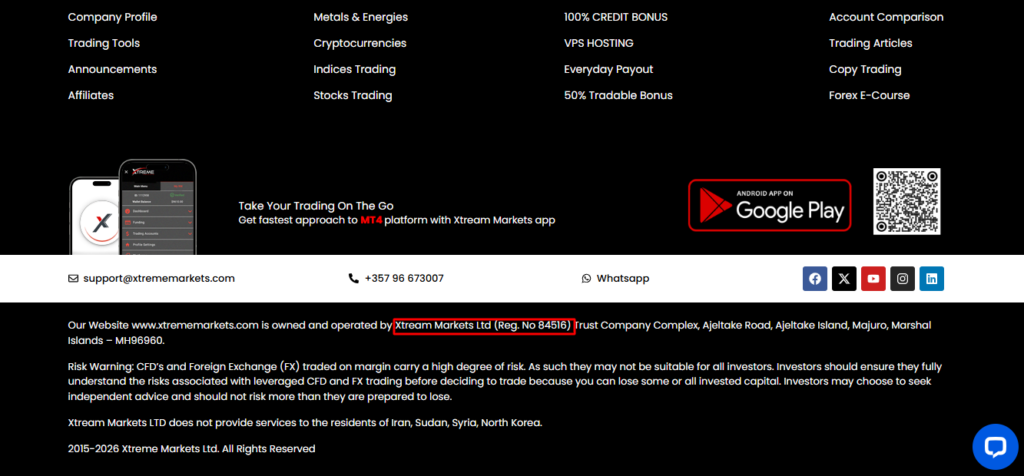
Locate the license number on the broker’s website footer. A genuine broker clearly shows its registration number and the regulatory body that controls it.

regulated broker

Navigate straight to the official website of the regulating organization. If you’re from the USA, use NFA BASIC, search by the broker’s NFA ID, and verify its current registration. UK traders use fca.org.uk; EU traders check ESMA-affiliated national registers.

Match the domain name and contact details shown on the regulator’s record against what the broker’s site displays. Any mismatch β€” a different address, phone number, or company name β€” is a disqualifying red flag.

A broker that can’t pass a five-minute public records check shouldn’t hold your money.

This protocol works precisely because it bypasses marketing entirely, relying solely on verifiable, regulator-maintained data. Run it on every broker, every time.

Key Takeaways

Locate the license number on the broker’s website footer. Legitimate brokers display their registration number and regulator name prominently β€” often near the legal disclaimer.

  • A broker’s regulatory record is public; there’s no excuse for not checking it.
  • A broker meeting all five criteria isn’t just compliant β€” it’s accountable.
  • trust, transparency, and accountability
  • A broker that can’t pass a five-minute public records check shouldn’t hold your money.
copy trading

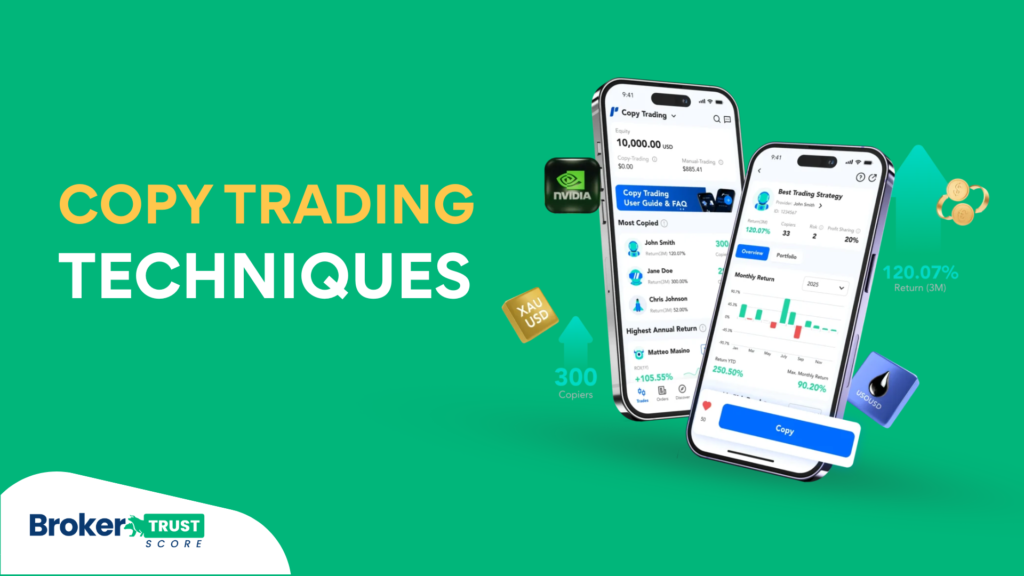
Copy-trading has been a magical procedure in trading in which you can instantly earn wealth without knowledge. Many of you might wonder how come a process can get you clear through the complications and let you enjoy hundreds of dollars. The answer to this is a yes because, with the modern trend, things have changed in trading. Here are the six common copy trading techniques that can help you accomplish in life with a lot of money:

Top Techniques to Win in Trading

  • Type of Account

Make sure that the trading account you are going to open with a broker should be the real one. In most cases, it’s seen that some people have contacted the team, and they have opened a trading account. Later on, when they used the account for a few weeks, it turned out to be the demo version. It was the demo account to which they were doing trading and you may not earn a bunch of money using that.

  • LeverageΒ 

It’s seen that leverage also plays a crucial role in knowing what you can earn in copy trading. Make sure you know what leverage your trader is using against the leverage you have. This will give you a close idea about the money you both can make. Suppose your trader is using the leverage of 300:1 and you have a leverage of 100:1. This means that your margin requirement will be significantly higher than him. It factors that you require ample funds to cover the rest $200.

  • Funds Share

Clarify that you have sufficient funds to do the copy trading. Your trader is exchanging with $200,000 and you are trading with just $100, then it’s clear to understand that you will hit the margin call. Also, you desire to have the currencies in mind that the type of currencies your trader is using in your comparison.

  • Stats of the Websites

The broker you are accepted for the copy trading must show you the live stats. It will be the reason for the success of your trades. The dealer must show every activity that you and your trader are doing. It must explain the currency you are dealing with, the number of dollars made by your trader, the commission he charges for the copy trading services, the history of his old trades, and more. When you realize all the stats, you realize that the best performing traders and finally you can select or leave a trader as per the performance. It’s not mandatory to stick with a trader who keeps you on a loss for a couple of trades.

  • Trade History

Make sure that you notice the longevity of a trader before copying all of his trades. See how long the trader was active in the past and does he trade in the present or not. Make decisive that you only select a trader who has been trading for at least a year or more than that. Once you select this type of account for copying the trades, there are hardly any chances of getting fraud. The person will thus help you earn an attractive online income.

  • Growth Rates on Monthly Basis

It’s always a topic of utmost concern that you see the growth rates of the trader on the monthly basis. If the monthly growth rates are increasing, it’s a clear sign the trader is doing good. Once you recognize the trader is doing great, make sure that you copy his trades. If the trader is making good money and things are looking positive, it’s time that you copy his trades.

  • Draw Down Rate

Every investor wants to associate with a trader who has a good drawdown. Drawdown depicts the decline of the curve the trading software shows to you to consider trading in a better way. When you see the drawdown is over 70%, it’s a signal that you are going to lose money in future by investing in the trader. Take a trader that has a drawdown of 10-50%. Once you select this type of trader, you are more likely to safeguard your trading account and it will not blow away.

  • Equity vs Cash

Clarify that the trader you are choosing for copying the trades must have not been over-leveraged. This means that he won’t have the high leverage as correlated to you. When the trader is over-leveraged, the cash will increase and the equity will decrease that will not grow you. Make sure that you are always in a safe position with high equity.

  • VPS Support

The trader is not usually from your country and he can be from another nation. When you do the copy trading with the support of a great firm, you know they use VPS. The VPS will not discomfort you by always turning on your computer to do trading. You can constantly turn your mobile or laptop anywhere and see the trading status without having to reconnect again and again.

Find the Most Trusted Platform that Does All For You.

If you are keen to have the encouragement of trading software that does all the above jobs for you, see xtremeMarkets. They will help you discover the most honored traders from around the world that do great in trading. You can simply follow them and copy their trades easily. See their registration page and become a member now to get the online income opportunity.

forex product

A brand is never complete without trust and support and thus it needs the awards support. Awards are always crucial for a business to build a reputation of the brand worldwide.Β Forex ProductsΒ are a popular element in the market right now and being a trader, you cannot compromise on the quality of the awards a platform should obtain. Forex market is not a common matter of discussion among the local audience, people don’t know it. After considering the following rules, you will know what awards make a trading platform amazing.


Types of Forex Products Awards a Company Can Get

Best Affiliate Program Award

A great forex trading platform offers affiliate programs for its users. This program is designed in a way that makes promotion work easy. Being a trader, you want extra from a platform and an affiliate program simply does that. Affiliate programs are all about the commissions. When a trader or an IB introduces someone to a broker, he gets a commission straightly. There is always a special percentage that goes with affiliate sponsorship. An individual gets a certain percentage, like 5% or 10% for each referral known as commission.


Every person may increase his wealth at any level. He can earn as much as he can with the referral process of a popular company. A top referral money provider is the favorite contender for all individuals to get money. Thus, the best affiliate program award is only given to those who offer the finest commissions to people. It’s seen that three types of people are involved in a trading broker site like a customer, affiliate site and a Trader/IB. The site gives a link to Trader & he sends the link to the other party. Each time he shares the link to a person and when the person joins, he gets the commission. The more new traders he brings to the company, the higher will be hisΒ forex productsΒ commission. The awards community only offers this award to individuals after analyzing all these facts.Β Β 


Best Customer Support Broker Award

Customer support is the backbone of any broker because, without it, he won’t survive in the competition. No software can run successfully if the brand that operates it has client support. Only the customer care executive knows how to handle the queries of the customers and make them feel satisfied with their products. Thus, a broker company that has the best technical support staff will win this type of award. Factors like forex bonus, lucky draw, daily payouts, VPS hosting, Trade and win are some elements to make customer-friendly software.


Best MT4 & MT5 Award

MT4 & MT5 are the software’s that makes the forex trading task easier than ever. This software provides the way to trade in Stocks, Cryptocurrency, Indices and Forex. The importance of this software is so great that you can do trading with this program’s only. Pro traders want award-winning software that can be used for understanding the various elements of trading. These elements include the simple interface, customization as per the interests, timeframes, hourly charts, pending orders, trading robots, ease of use and more.


Being aΒ forex productsΒ award winner, it’s hard to maintain the site. You need to update your clients about everything happening in the world. Giving tiny details to the person will make sure that he does the smart selling and buying of a currency. Becoming a winner of the platform means the platform has added some extra features to make the platform interesting. Trading based on market depth, economic calendar and analysis tools will make a trader successful.


Choose the Company that Gives Awards

An award-winning forex trading company is responsible for giving the right attributes of success that can be understood easily. With an award-winning product, you can easily have the fun of all times. One company that is offering these services in the present times is fxview . We are an award-winning company that has got the above-mentioned awards for our excellent works. We know that being a great firm is not easy and it requires a dedication to reach out to the target audience.


Our awards are a proof that we have excelled in our department and served well to our audience. We always strive to create good for the company and listens to the queries of individuals. Thus, our services are liked worldwide and fulfill the demand of people’s daily and monthly earnings. If you want to join our brand, just feel free and visit our site to know more. Simply visit our site and hit on the register now option and fill out the required details. Once the details are filled, your account is created and you are all set to trade and earn the perks of xtrememarkets like forex bonusΒ and more.Β Β 

Best Forex Brokers

Key Features of the Best Forex Brokers

The best forex brokers in 2026 focus on delivering a combination of security, performance, and user experience. A top broker is always regulated by reputable authorities, ensuring that traders’ funds are protected and operations are transparent.

In addition, competitive spreads and low trading fees play a major role in profitability. Advanced trading platforms, such as MT4 and MT5, provide powerful charting tools and automation features. The best brokers also offer access to a wide range of assets, including forex pairs, commodities, stocks, and cryptocurrencies, allowing traders to diversify their portfolios.


Types of Forex Brokers

Forex brokers generally fall into three main categories: market makers, ECN brokers, and STP brokers. Market makers create their own market and may take the opposite side of a trader’s position, which can sometimes lead to conflicts of interest.

On the other hand, ECN brokers connect traders directly to liquidity providers, offering transparent pricing and faster execution. STP brokers act as intermediaries, sending orders directly to liquidity providers without intervention. Each type has its own advantages, and the best choice depends on a trader’s strategy and experience level.


Mobile Trading in 2026

Mobile trading has become a standard feature in 2026, allowing traders to access the market anytime and anywhere. Top brokers now offer highly advanced mobile applications that provide full trading functionality, including chart analysis, order execution, and account management.

These apps are designed to be fast, secure, and user-friendly, ensuring that traders never miss an opportunity. Real-time notifications and updates also help traders stay informed about market movements, making mobile trading an essential tool in modern forex trading.


Deposits, Withdrawals, and Support

Efficient financial transactions are a key factor when choosing a forex broker. The best brokers offer multiple deposit and withdrawal methods, including bank transfers, e-wallets, and even cryptocurrencies. Fast processing times and low fees make these brokers more attractive to traders.

Customer support is equally important. Reliable brokers provide 24/7 support through live chat, email, and phone, ensuring that users can resolve issues quickly. Good support not only improves user experience but also builds trust between the broker and the trader.


Final Thoughts

Choosing the best forex broker in 2026 requires careful evaluation of several factors, including regulation, fees, trading platforms, and customer support. A good broker should align with your trading goals and provide a secure and efficient environment. With the right choice, traders can maximize their potential and succeed in the competitive forex market.

More Articles